Construction draw schedule template
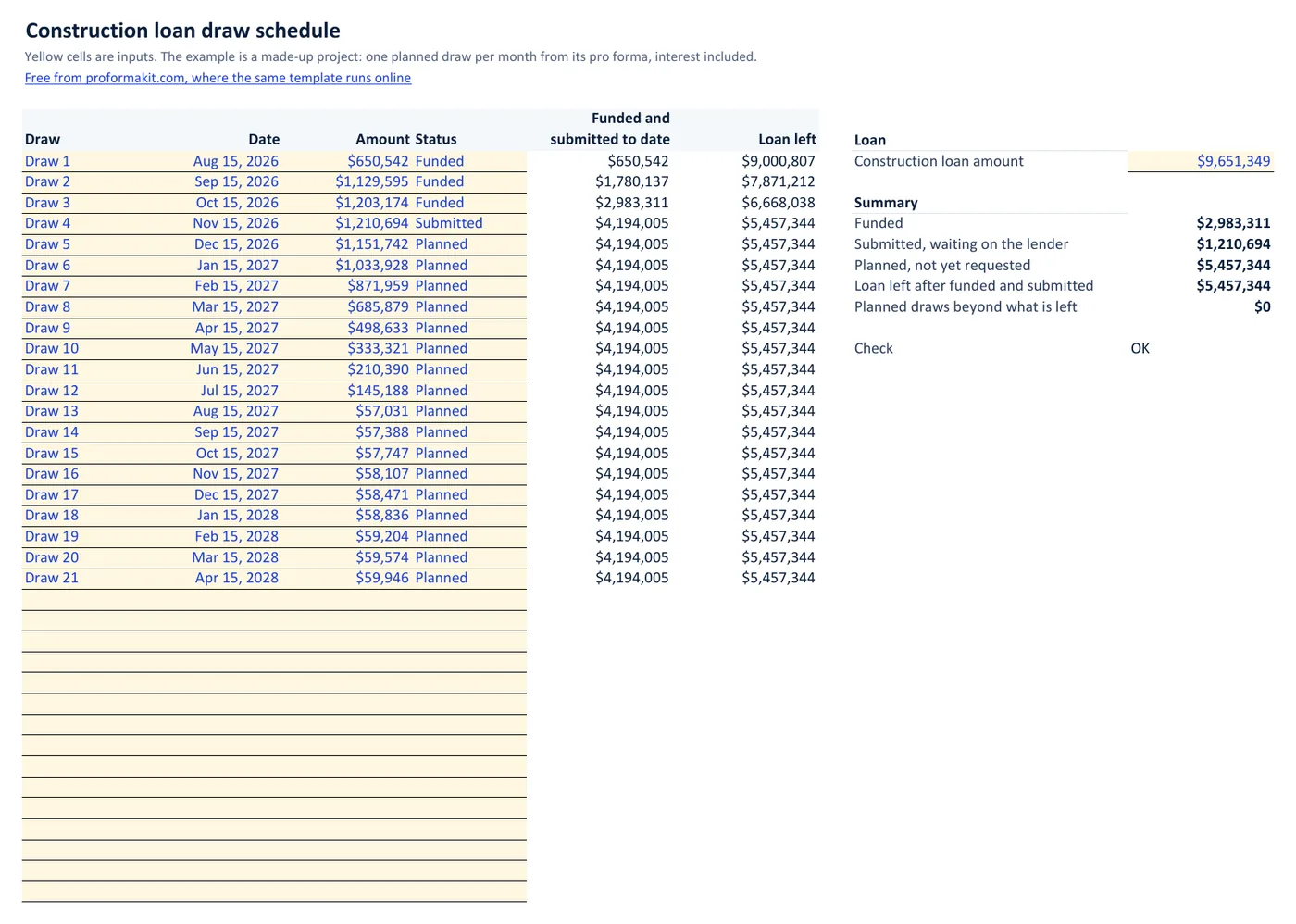
A free construction loan draw schedule you can download as an Excel file or run right here. ProformaKit plans one draw for each month the loan funds, interest included, then tracks every draw as planned, submitted or funded against the loan and shows how much is left to request.
Sample project Made-up numbers to show how it works. Change any of them to start your own.
Construction loan
$9,651,349
65% of cost, from the pro forma
Funded
$2,983,311
Submitted
$1,210,694
Waiting on the lender
Loan left
$5,457,344
After funded and submitted draws
Planned
$5,457,344
Not yet requested
Funded 31%Submitted 13%
| Draw | Date | Amount | Status | Remove |
|---|---|---|---|---|
$ | ||||
$ | ||||
$ | ||||
$ | ||||
$ | ||||
$ | ||||
$ | ||||
$ | ||||
$ | ||||
$ | ||||
$ | ||||
$ | ||||
$ | ||||
$ | ||||
$ | ||||
$ | ||||
$ | ||||
$ | ||||
$ | ||||
$ | ||||
$ |
How the example schedule is built
The example's loan is $9,651,349. All of the equity goes in first, so the first draw does not come until month 7, August 2026, for $650,542. Draws then follow construction spending up the S-curve to the largest, $1,210,694 in November 2026, and back down as the work finishes.
The last 9 draws are smaller, from $57,031 rising to $59,946 as the interest compounds. Construction is over by then, and those draws only fund the interest the loan keeps charging during lease-up: they are the loan's interest reserve being drawn. Together the 21 draws add up to the loan to the dollar. If your lender funds pro rata with equity rather than equity first, edit the dates and amounts by hand.
The cash you carry between draws
Subcontractors want paying when the work is done. The lender pays after inspection and paperwork. A BiggerPockets post on hard money draws, which reimburse work already finished, put it plainly: "you are funding the work out-of-pocket first and getting paid back second." How long you wait depends on who you ask. In Rabbet's 2026 State of Construction Finance Report, developers gave a median of 10 days from draw request to funding, and lenders gave 6.5 days for the same process.
Here is what that means in the example's busiest month, October 2026, when $1,192,048 of work is billed. If you pay those invoices at month end and the draw funds 10 days later, you need about that much cash for those 10 days, on top of the equity already in. A 30-day turnaround means carrying it for a month. Plan the credit line or reserve before the peak, not during it.
What a lender checks before funding
Each draw request goes in with the invoices or pay application behind it, lien waivers from the contractors paid last time, and an inspection of the work in place. Some lenders also want a title update before every draw: in the construction draw process of WHEDA, Wisconsin's housing finance agency, the title company disburses only once an endorsement is issued to the title commitment. Asked where a delayed draw package sits, 92% of lenders in the Rabbet survey pointed to the borrower correcting errors or missing documents. None named their own review queue.
The Excel file includes a draw request sheet for that package: each budget line with its budget, costs to date, percent complete and balance to finish, then total costs to date less the equity paid in and earlier draws, which is the amount this draw asks for. Some lenders insist on their own form; WHEDA's process requires its own Developer Excel spreadsheet for every draw. In that case, copy the numbers across.
What it does not do
It does not hold retainage, schedule inspections, collect lien waivers or send anything to the lender; how it compares with paid construction draw management software is on its own page. It tracks amounts, dates and status for one loan. Funded and submitted draws so far in the example come to $4,194,005, leaving $5,457,344 of the loan to request.
Where the numbers come from
The draw plan comes straight from the development pro forma: the month equity runs out, the S-curve of hard costs, and the interest. The spending each draw pays for is tracked in the construction budget template. The full process, step by step, is in how construction loan draws work.
Questions developers ask
What is a construction draw schedule?
A list of the loan advances you expect to request during construction, usually one a month, with the date, the amount and what each one pays for. The lender funds each draw after checking the work is done and the paperwork is complete.
How many draws does a construction loan have?
Usually one a month while the loan is funding. The example has 21: 12 during construction and 9 during lease-up, when the only thing left to fund is interest.
How long does a construction draw take to fund?
It depends on the lender, and on who you ask. In Rabbet's 2026 State of Construction Finance Report, developers reported a median of 10 days from submitting a draw request to funding, while lenders reported a median of 6.5 days for the same process.
What is the difference between a submitted and a funded draw?
Submitted means the request is with the lender and the money has not arrived. Funded means it has. The template counts both against the loan, so the loan left is what you can still request.
What is retainage, and does the template handle it?
Retainage is a share of each payment, held back from the contractor until the work is finished. The template does not track it; if your contract has retainage, enter the net amount paid in each draw.
Is the draw schedule template free?
Yes. The Excel file downloads without an email address, and the online version needs no account.
Want it for your team and your lender?
The free tool works for one person in one browser. If enough developers ask for shared projects, invoice approvals and draw packages a lender can open, those come next. Leave your email and we will write once, if they ship.